Bonus Tiering Mechanics in Poker and Backgammon Skill Platforms
Tina Schmid · Jul 13, 2026
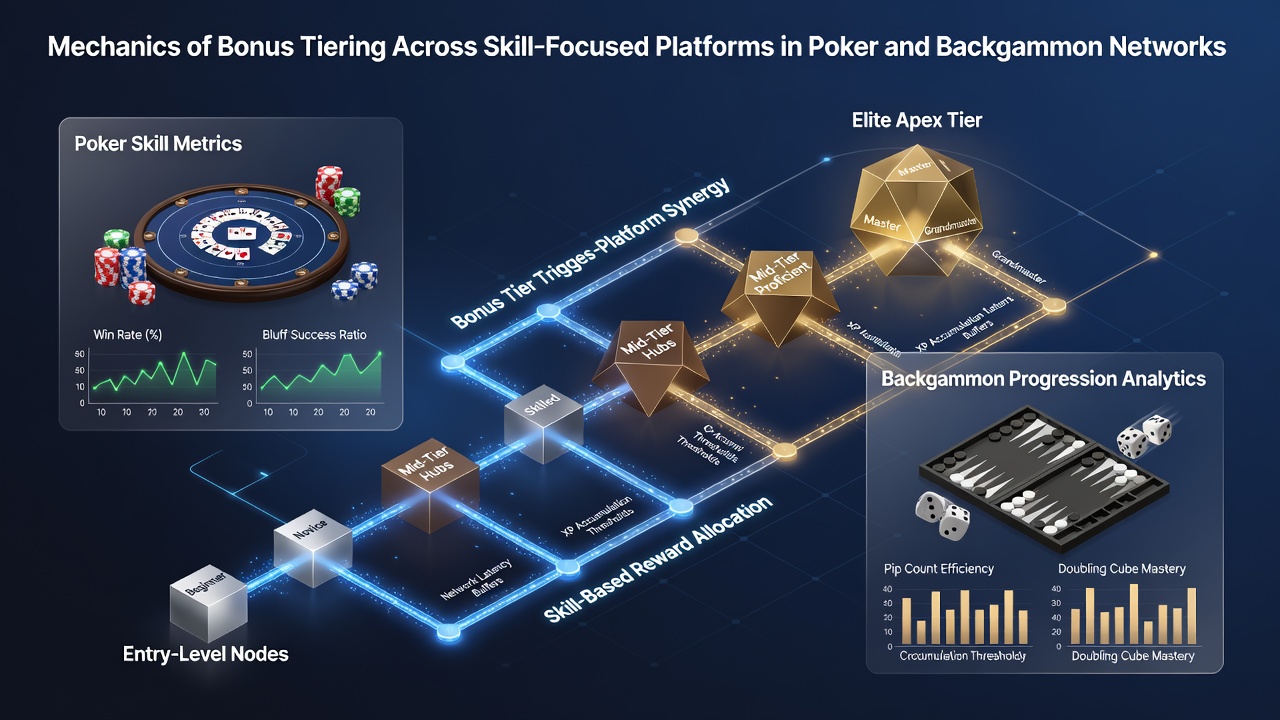
Bonus Tiering Mechanics in Poker and Backgammon Skill Platforms
Skill-focused platforms in poker and backgammon have developed structured bonus systems that operate through multiple tiers, where rewards scale according to player activity, points accumulation, and network participation metrics tracked by the operators themselves. These systems differ from fixed casino promotions because they tie directly to ongoing performance indicators such as hands played, games completed, and rake generated, creating layered eligibility that resets or advances at defined thresholds.
Core Components of Tier Structures
Operators calculate tier placement using a combination of volume-based metrics and time-bound windows, where players move between levels after reaching cumulative targets that the platform software monitors automatically. Research from academic sources indicates these calculations often incorporate both short-term weekly targets and longer seasonal cycles, allowing networks to adjust payout ratios without altering core game rules. Data from regulatory filings shows many platforms maintain between four and seven distinct tiers, with entry-level access granted after minimal activity and top tiers reserved for those sustaining high engagement over extended periods.
Points systems form the backbone of advancement, as each completed game or hand contributes weighted values based on stake size and game variant, feeding into algorithms that determine when a player qualifies for the next tier. Backgammon networks frequently weight match length and doubling cube usage in their formulas, whereas poker platforms emphasize pot size and tournament buy-ins to differentiate casual participants from dedicated users.
Progression and Reset Cycles Across Networks
Most platforms implement monthly or quarterly reset periods for tier standings, which forces players to maintain consistent activity rather than relying on one-time surges, and observers note that this design encourages repeated logins throughout the cycle. In July 2026 several major networks updated their reset calendars to align with fiscal quarters, resulting in synchronized advancement opportunities that coincide with peak tournament seasons for both poker and backgammon formats. Those who study platform data observe that reset timing influences retention rates, with shorter cycles correlating to steadier engagement patterns across skill-based titles.
Bonus multipliers at each tier level apply automatically once the system registers the required points threshold, delivering cashback percentages, entry fee credits, or exclusive tournament access that scales upward with rank. Poker networks typically add leaderboard bonuses at higher tiers while backgammon platforms emphasize match-specific rewards, reflecting differences in how each game type distributes play volume.

Regional Regulatory Influences on Tier Design
Platforms operating under licenses from the Malta Gaming Authority must publish clear tier advancement rules and maintain audit trails for all point calculations, ensuring transparency that players can verify through account dashboards. Similar requirements appear in filings with the Nevada Gaming Control Board, where operators document how bonus tiers interact with player fund segregation rules. Industry reports from the European Gaming and Betting Association highlight that these disclosures help standardize practices across borders while still permitting regional variations in reward types.
Network operators also integrate anti-abuse mechanisms into tier calculations, such as velocity caps that limit points earned within short timeframes to prevent automated play from dominating advancement. According to data compiled by the National Council on Problem Gambling, these safeguards appear more frequently in skill game environments because the underlying activity already involves strategic decision-making rather than random outcomes.
Integration With Tournament and League Features
Tier status often unlocks additional entry paths into scheduled events, where higher ranks receive priority registration or reduced fees that the platform deducts from accumulated rewards. Poker networks frequently link tier progression to satellite tournament qualification, while backgammon platforms route advanced tiers toward specialized match ladders that feature custom scoring. Figures released by several operators in mid-2026 revealed that tiered players accounted for over 60 percent of total tournament volume during peak months.
Cross-promotion between poker and backgammon sections within the same network allows points earned in one game to contribute toward shared tier advancement, creating unified progression systems that reward multi-game participation. This approach appears in several established platforms and aligns with broader trends toward consolidated user accounts across skill-focused offerings.
Conclusion
Bonus tiering in poker and backgammon networks functions through interconnected metrics, reset schedules, and regulatory frameworks that together determine how rewards distribute among participants. These mechanics continue to evolve as operators refine point formulas and alignment with seasonal calendars, particularly around periods such as July 2026 when multiple networks implemented synchronized updates. The resulting structures maintain clear pathways from entry-level access to premium benefits while incorporating safeguards documented in regulatory and industry sources.