Game Formats and Entry Rewards Across Poker, Bingo, and Betting Exchanges
Jordan Schmid · Jul 31, 2026
Game Formats and Entry Rewards Across Poker, Bingo, and Betting Exchanges
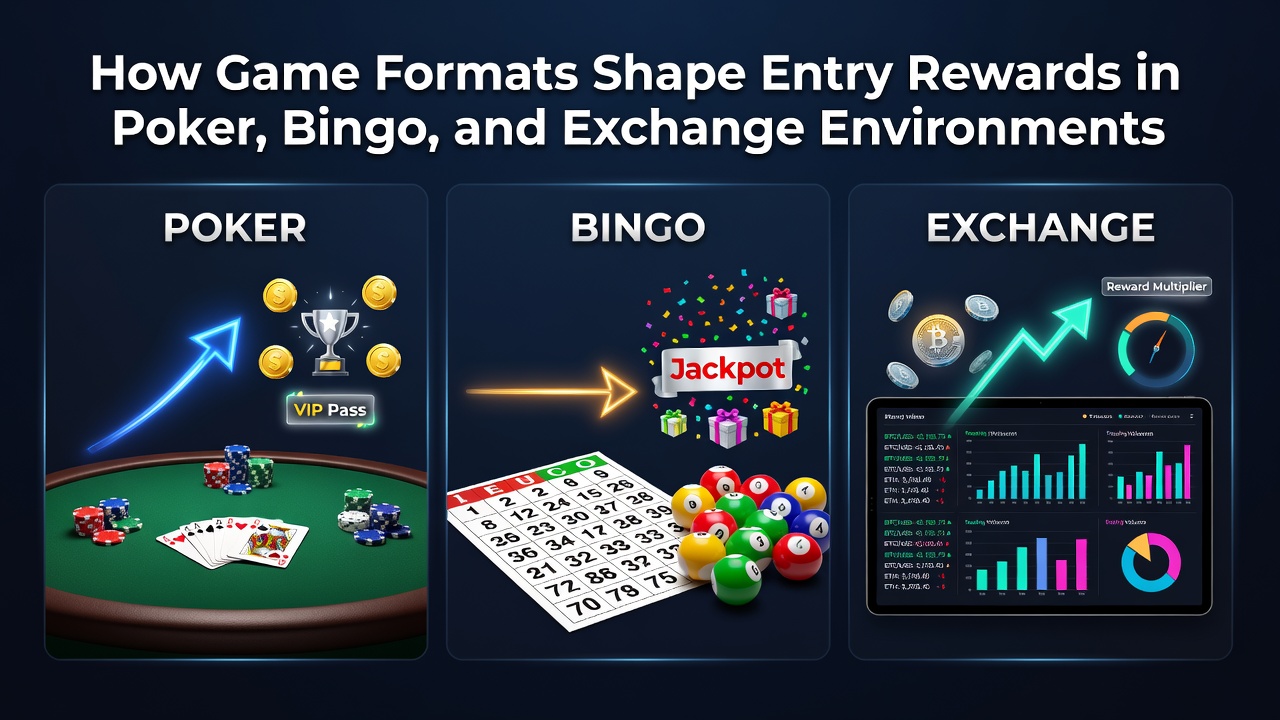
Entry rewards in poker, bingo, and betting exchanges follow patterns tied directly to each format's structure, prize pool mechanics, and participation rules, according to industry analyses released in mid-2026. Tournament-style poker events pool buy-ins from all participants into a single prize distribution, whereas cash games deduct rake on a per-hand basis without creating collective reward pools, data from gaming oversight reports confirm. Bingo sessions operate through ticket sales that feed fixed or progressive jackpots, while betting exchanges apply commission models on matched wagers rather than upfront entry fees.
Poker Tournament Structures and Buy-In Rewards
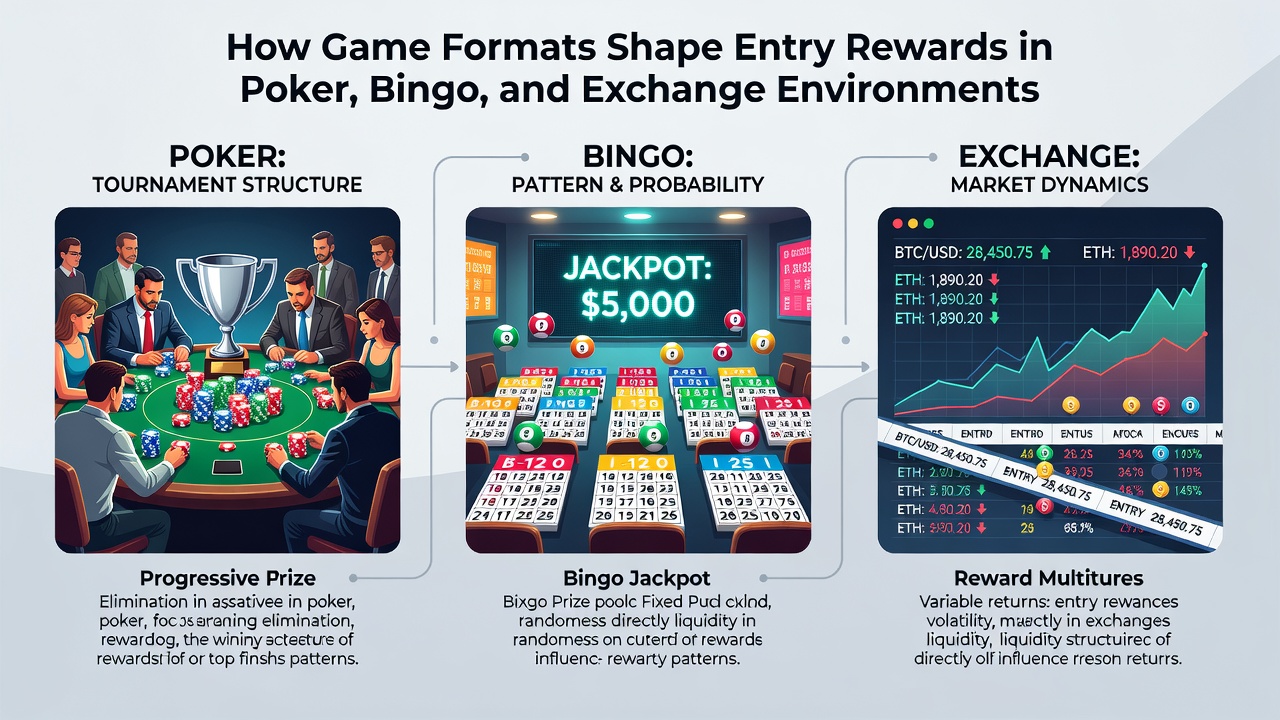
Poker tournaments collect entry fees that scale prize pools proportionally to the number of participants, with larger fields generating higher top payouts and satellite qualification paths. Cash game formats instead charge ongoing rake percentages, typically between 2.5 and 10 percent, which operators retain without redistributing to players as entry-based rewards. Observers note that multi-table tournaments in July 2026 continued to emphasize overlay opportunities when guaranteed prize pools exceeded actual entry collections, a practice documented in regulatory filings from multiple jurisdictions.
Freeroll events represent another format variation where operators fund prize pools independently of player contributions, creating zero-entry-cost rewards that still follow tournament distribution rules. Sit-and-go formats bridge these approaches by using smaller, fixed participant counts that produce quicker reward cycles compared with multi-day main events.
Bingo Session Designs and Ticket-Based Rewards
Bingo rewards derive from ticket volume sold per session, with 75-ball and 90-ball variants determining how quickly jackpots accumulate and distribute. Pattern-based games require specific number combinations that influence prize tier structures, whereas traditional line or full-house wins trigger more frequent smaller payouts. Progressive jackpot formats link multiple venues or online rooms, channeling a percentage of each ticket sale into growing reward pools that reset after winners claim them.
Session length and ball draw speed also shape reward frequency, with shorter games producing more entry opportunities per hour yet smaller individual prizes. Special event sessions, such as themed or charity bingo nights, often allocate higher percentages of ticket revenue to rewards compared with standard daily operations, according to figures compiled by European gaming associations.
Betting Exchange Commission Models and Entry Costs
Betting exchanges charge commissions on net winnings from matched bets rather than collecting upfront entry fees, creating a reward structure where profitability depends on volume and odds accuracy. Users place back and lay positions that match against other participants, with the platform taking a cut typically between 2 and 5 percent after successful settlements. This format eliminates traditional bookmaker margins and instead ties operator revenue directly to trading activity levels.
Exchange-specific promotions sometimes rebate portions of commissions during high-volume periods, effectively returning value to active traders without altering base entry mechanics. Market liquidity in popular events influences reward potential, as thinner markets reduce matching opportunities and therefore limit realized gains after commission deductions.
Cross-Format Comparisons in Reward Distribution
Research from academic gaming studies indicates that tournament poker and progressive bingo both aggregate entries into centralized pools before redistribution, whereas exchange models spread costs across individual matched transactions. This structural difference produces distinct reward timelines, with poker and bingo events delivering lump-sum payouts at session or tournament conclusion while exchanges settle continuously as markets resolve.
Regulatory data collected across North American and Australian markets in 2026 shows consistent patterns where format transparency requirements affect how operators advertise entry rewards, particularly for progressive elements that span multiple games or locations. Player participation rates further modulate these dynamics, since higher engagement directly expands available reward pools in pooled-entry formats.
Conclusion
Game formats establish the mathematical and operational frameworks that determine how entry contributions convert into player rewards across poker, bingo, and betting exchanges. Tournament buy-ins, ticket sales, and commission structures each create distinct distribution mechanisms that operators apply consistently within their respective environments. As participation data continues to accumulate through 2026, these format-driven patterns remain central to understanding reward availability and scale in each vertical.