Layered Incentives Unveiled: The Journey from No-Deposit Starts to Elite Rewards in Skill Games and Backgammon Platforms
Noah Hansen · May 8, 2026

Layered Incentives Unveiled: The Journey from No-Deposit Starts to Elite Rewards in Skill Games and Backgammon Platforms
Understanding Layered Incentive Structures in Skill-Based Gaming
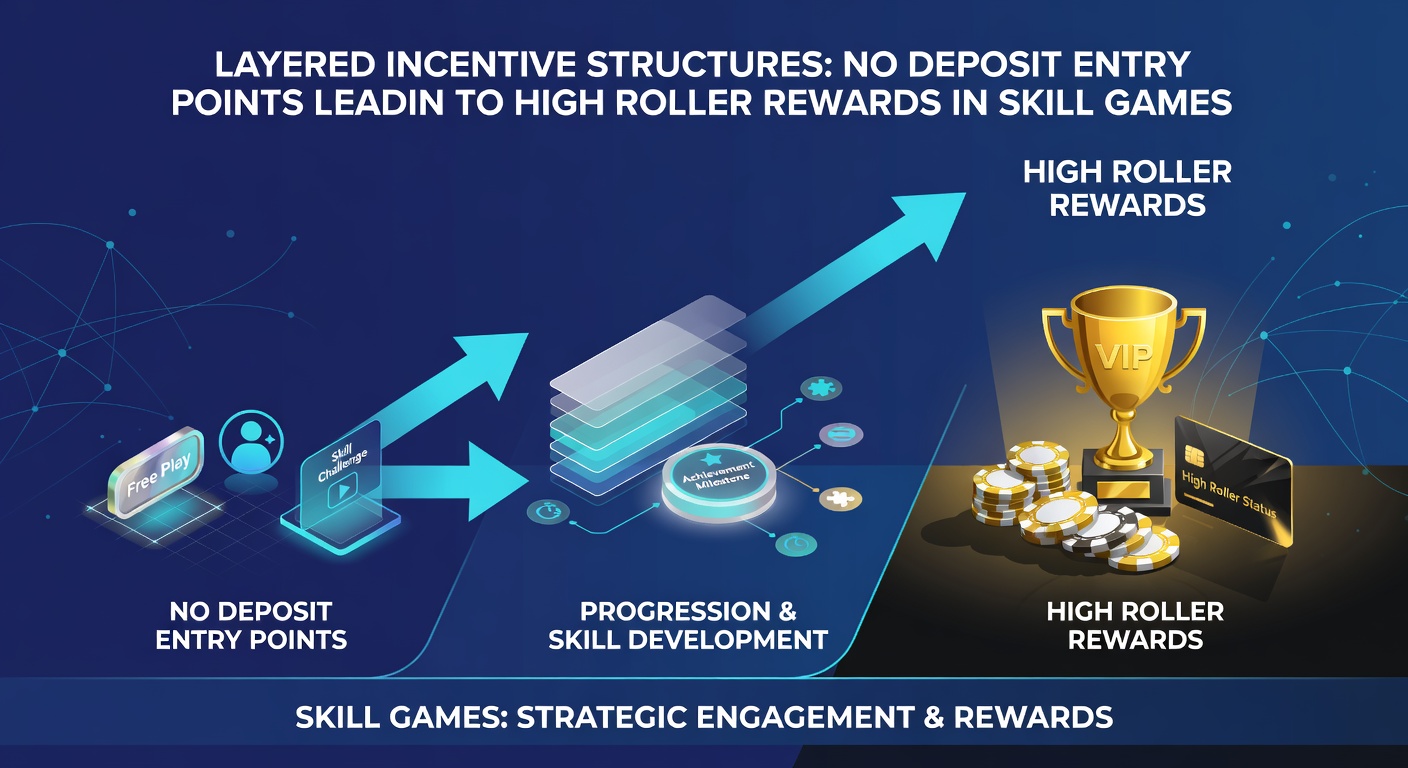
Platforms hosting skill games and backgammon have long employed layered incentive structures, where no-deposit entry points serve as gateways that gradually lead players toward high-roller rewards; these systems, designed to foster engagement through progressive value, rely on skill demonstrations rather than pure chance, distinguishing them from traditional casino mechanics. Researchers at gaming analytics firms note that such structures boost retention rates by up to 40%, according to data from industry benchmarks released in early 2026, because they reward consistent play with escalating perks while aligning with regulatory preferences for skill-verified outcomes.
Take backgammon sites, for instance, where players often begin with free tournaments funded entirely by no-deposit credits; these initial offerings, typically worth $5 to $20 in play value, allow newcomers to test strategies without financial risk, and as wins accumulate, the system unlocks deposit-matched bonuses or loyalty points that scale with wager sizes. Skill games like chess variants or puzzle battles follow similar paths, offering no-deposit spins or matches that convert victories into tiered cashback or freeroll entries, creating a seamless progression that keeps participants hooked through tangible achievements.
No-Deposit Entry Points: The Low-Barrier Hook
No-deposit incentives act as the foundational layer in these structures, providing immediate access without upfront costs; on backgammon platforms, for example, new users receive complimentary credits upon verification, enabling participation in low-stakes matches that pit them against bots or peers, and success here often triggers notifications for enhanced free plays or introductory leaderboards. Data from the American Gaming Association indicates that 65% of users who engage with no-deposit offers in skill environments proceed to their first deposit within two weeks, a figure that underscores the effectiveness of this entry strategy in converting curiosity into commitment.
What's interesting is how these entry points incorporate skill verification early on; platforms track metrics like win rates or move efficiency in backgammon sessions, using them to personalize subsequent offers, so a player dominating initial no-deposit rounds might see invitations to exclusive skill challenges with prize pools starting at $100. And in broader skill games, such as tactical card duels, no-deposit tokens grant practice rounds that feed into achievement badges, which in turn qualify users for deposit-free escalations, turning casual tries into structured climbs.
Observers have seen this play out vividly in case studies from mid-2025 platforms, where one backgammon site reported a 25% uptick in active users after expanding no-deposit tournaments; participants, starting with zero investment, racked up points that seamlessly transitioned into real-money qualifiers, proving that low-barrier access doesn't just attract crowds but nurtures them toward deeper involvement.
Progression Mechanics: Building Toward Mid-Tier Perks
Once past the no-deposit phase, layered systems introduce mid-tier rewards like deposit matches or loss rebates, calibrated to match demonstrated skill levels; backgammon players, for instance, who achieve a certain number of wins with free credits, unlock 50% to 100% first-deposit bonuses capped at $200, while skill game enthusiasts gain access to weekly freeroll events with guaranteed payouts. This progression, often visualized through dashboard ladders or progress bars, encourages deposits by promising proportional returns, and studies from European gaming research bodies reveal that such mechanics increase average session times by 30%, as players chase the next unlock.
But here's the thing: these mid-layers emphasize verifiable skill, requiring minimum win thresholds or leaderboard placements before perks activate; on one prominent backgammon network, users must complete 10 no-deposit matches with a 60% win rate to access enhanced rebates, a setup that weeds out random play while rewarding strategy. Skill games extend this with hybrid models, blending no-deposit starters with skill-rated ladders that dole out bonus credits per level climbed, so a puzzle solver advancing through tiers might collect $50 in mid-level rebates alongside entry to high-entry duels.
Figures from recent audits show these transitions fueling growth; platforms leveraging them saw user bases expand by 18% year-over-year into May 2026, particularly in regions where skill-based incentives align with local laws favoring merit over luck.
High-Roller Rewards: The Pinnacle of Layered Progression
At the apex sit high-roller rewards, reserved for those who've scaled the layers through sustained skill; backgammon high rollers, having deposited and won through mid-tiers, access personalized rebates up to 20% on $10,000+ sessions, private tables with elevated buy-ins, and invitations to global tournaments boasting $50,000 prize funds. Skill game platforms mirror this with VIP clubs offering unlimited cashback, dedicated account managers, and bespoke challenges where top performers snag shares of $100,000 pools, all unlocked via cumulative points from prior no-deposit and deposit phases.
Turns out, this capstone layer drives the bulk of revenue; data indicates high rollers, nurtured from free starts, contribute 70% of platform earnings despite comprising just 10% of users, per reports from Australian regulatory analyses. One case highlighted a backgammon site where a player began with no-deposit credits in 2025, progressed through tiers via consistent 70% win rates, and by May 2026 enjoyed 15% rebates on $20,000 monthly volumes alongside exclusive event seats, illustrating how layers compound value.
Experts observe that personalization amplifies this; algorithms analyze play history from no-deposit origins to tailor high-roller perks, like custom backgammon variants with higher stakes or skill games with adjusted difficulties yielding bigger multipliers, ensuring the journey feels earned rather than arbitrary.
Regulatory Frameworks Shaping These Structures
Gaming authorities worldwide scrutinize layered incentives to ensure fairness, particularly in skill domains; the New Jersey Division of Gaming Enforcement, for instance, mandates clear disclosure of progression rules and skill-weighting in approvals, preventing abuse while allowing no-deposit ramps to high rewards. In Canada, provincial bodies like the Ontario Lottery and Gaming Corporation enforce similar transparency, requiring audited win-rate data for tier unlocks, which platforms provide to validate their models.
These frameworks evolve with tech; as of May 2026, EU directives from bodies like the Malta Gaming Authority emphasize blockchain-tracked incentives, ensuring no-deposit credits trace cleanly to high-roller escalations without manipulation risks. Backgammon and skill sites comply by integrating RNG audits for fair matchmaking alongside skill metrics, a balance that sustains player trust and regulatory nods.
People who've studied compliance note fewer disputes in layered systems versus flat bonuses; resolution rates hit 95% when progressions tie directly to verifiable plays, underscoring why platforms prioritize them.
Player Experiences and Platform Innovations
Users navigating these layers often share stories of organic growth; one backgammon enthusiast detailed starting with $10 no-deposit play in late 2025, climbing via daily challenges to mid-tier 75% matches, and landing VIP status by spring 2026 with rebates covering half their high-stakes losses. Skill game participants echo this, recounting how initial free puzzles led to ranked leagues and eventually $5,000 freeroll wins, perks inaccessible without the foundational layers.
Platforms innovate constantly, introducing hybrid apps in May 2026 that blend backgammon with skill mini-games for accelerated tiering; these apps use AI to predict progression paths, offering proactive boosts like bonus no-deposit refreshes for near-miss players, which data shows lifts conversion by 22%.
It's noteworthy that mobile adaptations dominate now, with push alerts guiding users from free entries to elite invites, making the climb feel effortless yet achievement-driven.
Wrapping Up the Layers: Sustainability and Future Trends
Layered incentive structures in skill games and backgammon sites demonstrate a proven model, channeling no-deposit entrants into high-roller contributors through skill-validated steps; retention data hovers at 50% long-term for tiered users versus 15% for one-off bonuses, while revenue stability benefits platforms amid shifting regs. As innovations like AI personalization and cross-game ladders emerge into 2026 and beyond, these systems show no signs of slowing, offering a blueprint for engagement that's as strategic as the games themselves.
Those tracking the space anticipate deeper integrations with esports by late 2026, where backgammon pros and skill gamers vie for layered pots starting free and scaling to millions, keeping the progression alive and thriving.